

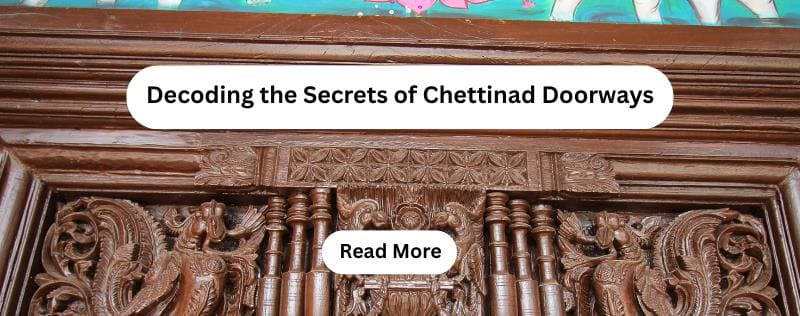
When you step inside a classic Chettinad house, the very first thing that captures your attention is almost always the magnificent, deeply carved door frames. They might initially look like mere, elaborate décor, but in truth, each wooden frame is a tapestry, layered with cultural narratives, profound symbolism, and the hidden history of the family that has lived within its walls for generations. Each intricate curve, every motif, and the way the patterns interlock tell a powerful story of heritage, achievement, and profound faith.
The Chettiars were an incredibly influential and successful South Indian group, establishing a reputation through vast global trade with ports reaching as far as Burma, Malaysia, and Singapore. This dynamic history of international commerce is, in fact, subtly preserved right within the designs of many Chettinad door frames. If you observe closely, you’ll spot detailed carvings of ships, flowing waves, and pearls on the wood. These aren't just for show; they act as compelling, visual testaments to their lengthy travels and the significant fortunes those expeditions delivered back home.
It's fascinating how some of the patterns even hint at South-East Asian temple design, a subtle tribute to the distant cultures the traders encountered and truly admired. Ultimately, each carving functioned as a kind of permanent, wooden logbook, documenting an unbroken tradition of trade, daring travel, and discovery.
For Chettinad families, the doorway was far more than a way in; it was considered a deeply respected threshold of good fortune. Because of this, the door frames feature paired elephants, intricately sculpted to symbolize power and blessings, and kalasham (sacred pot) carvings, which represent a home filled with prosperity and fertility. To walk through such a doorway was believed to be an act of inviting blessings—wealth, happiness, and prosperity—into the home, casting an aura of auspicious beginnings over every person who entered or lived there.
Both fierce and elegantly styled, the Yali—a mythical creature often depicted as a powerful lion-like being—is a common fixture on these door frames. According to local folklore, the Yali plays a vital role: it actively shields the home from the "evil eye" and all types of bad energy.
Interestingly, you'll find much of the carving is dedicated to motifs like intertwining creepers, mango leaves, and parrots—these are classic symbols meant to represent both enduring love and the continuity of the family line. Notably, a bride would first cross this very carved threshold during an arranged marriage, trusting it would bless her with a peaceful and abundant life in her new household.
But the story goes even deeper than just the symbols. These frames speak quietly of devotion and incredible skill. The artisans themselves approached the work spiritually, frequently lighting lamps and chanting sacred mantras before their tools ever touched the timber. It's precisely this reverence and sheer dedication that gives old Chettinad door frames their unique feeling; they seem truly alive with the prayers, careful attention, and artistry passed down through generations.
Think back to a time before we had formal street addresses or house numbers. In that era, every door frame also served as a sort of subtle family signature, helping distinguish one household and reflecting the identity of its owners. Unique patterns, hidden initials, or specific motifs effectively became a distinctive family crest, meaning guests, merchants, and even travelers could easily spot and identify the house from a distance.
Ultimately, Chettinad door frames are much more than just stunning building features; they stand as priceless vaults holding history, deep spirituality, and masterful artistry. These door frames move beyond simple decoration, becoming subtle invitations that encourage everyone who walks by to pause, truly look, and appreciate the layered, patient stories carved meticulously into every piece of wood, thereby connecting the long, rich past seamlessly with the vibrant life of today.
Crucially, this tradition is far from a forgotten artifact found only in old houses; it is a vibrantly preserved, living art form. When you pass through the doorways at Myvillage Resort, you aren't just entering a room—you are stepping across an authentic Chettinad threshold. The resort has painstakingly incorporated these complete, traditional door styles, turning every entrance into a curated piece of heritage. Here, the guardian Yalis, the auspicious elephants, and the symbols of prosperity are no longer just historical footnotes; they are the functional, vibrant part of your holiday experience, ensuring that the spirit of Chettinad is the very first thing that welcomes you home.
 Book Now